
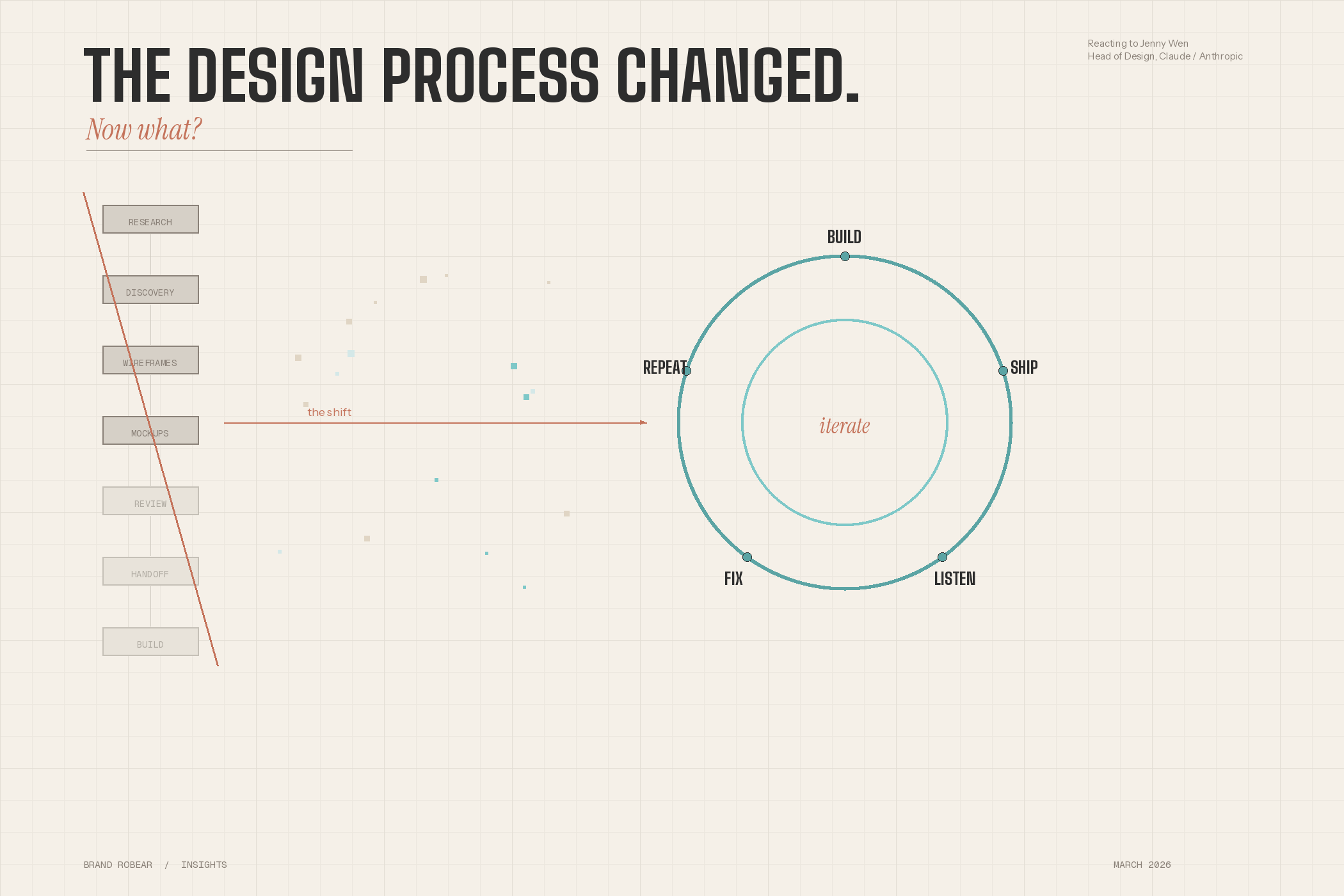
The Design Process Changed. Now What?
Source: Jenny Wen, Head of Design for Claude (Anthropic) on YouTube
Jenny Wen runs design for Claude at Anthropic. In a recent conversation, she laid out how radically the design process has shifted inside one of the most consequential AI companies in the world. Her argument is blunt: the old cycle of research, discovery, mocking, and handoff is too slow. Engineering speed has outpaced it. Designers who cling to the old process are becoming bottlenecks.
I've been thinking about what that means for the organizations I work with. Not venture-backed startups. Community organizations, nonprofits, education programs, cultural institutions. The ones doing the work with fewer resources and higher stakes.
Here's what landed for me, and where I think it matters beyond Silicon Valley.
Mocking Less, Building More
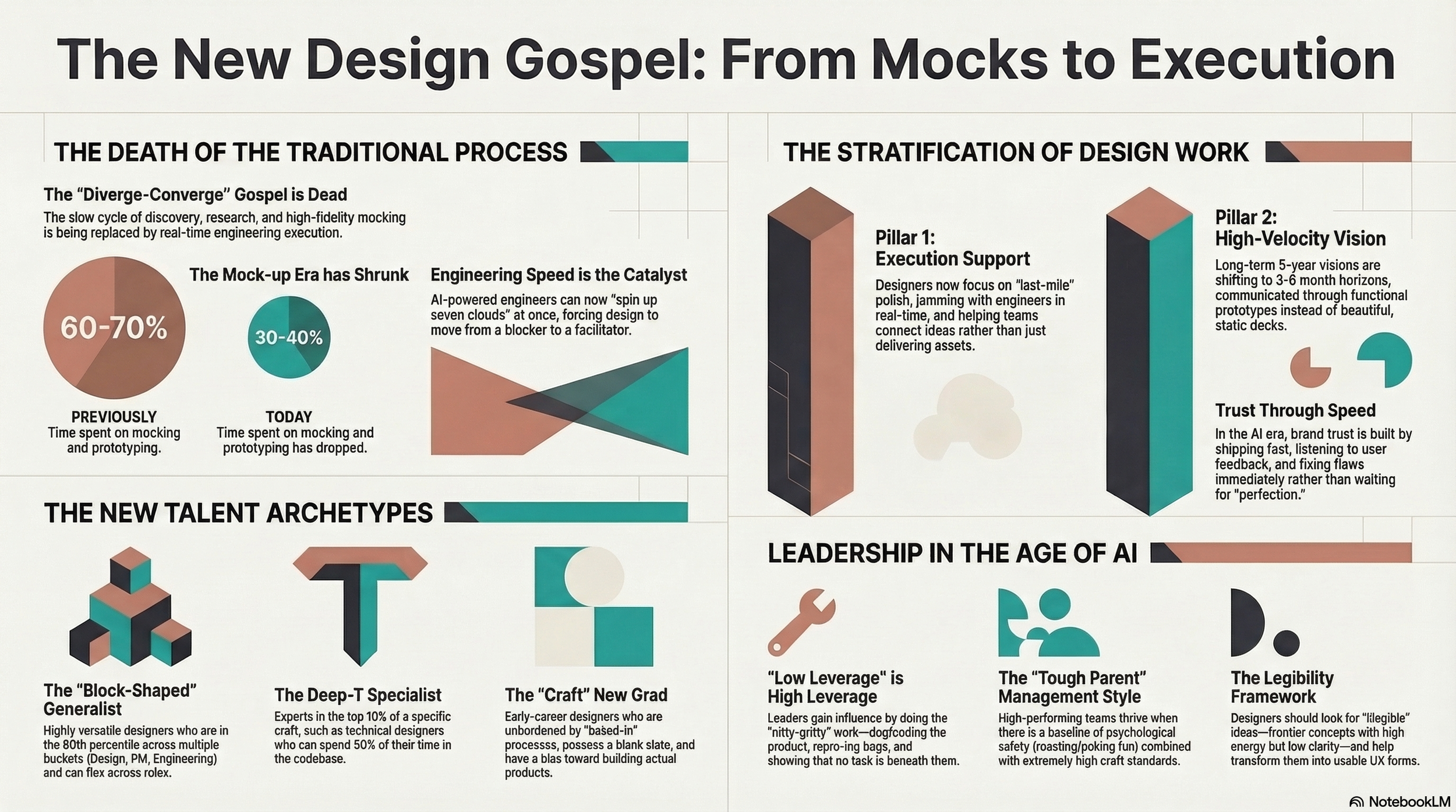
Wen says designers used to spend 60 to 70 percent of their time on high-fidelity mockups. Now it's closer to 30 to 40 percent. The rest is spent working directly alongside engineers, adjusting things in real time as the product takes shape.
This tracks with what I'm seeing in my own practice. I've been using AI tools to move from concept to working prototype faster than a traditional mock-review-revise cycle would allow. The mockup isn't the deliverable anymore. The thing itself is.
For community organizations, this shift is actually good news. It means the gap between "here's a concept deck" and "here's something you can actually use" is shrinking. A nonprofit building a new program page doesn't need three rounds of wireframes. They need a working draft they can react to and refine.
The practical takeaway: if your designer's process still requires weeks of static comps before anything gets built, that process is costing you time and money. Ask for a working version sooner.
Vision Lives in Working Prototypes, Not Slide Decks
Wen makes the point that long-range vision decks are losing relevance when the underlying technology changes every few months. At Anthropic, vision has a 3-to-6-month horizon, and it's expressed through functional prototypes, not presentations.
I'd push this further. For the organizations I work with, the vision deck was already a problem. I've seen too many community organizations spend months on a strategic plan document that sits on a shelf. The plan becomes a thing you made, not a thing you use.
A better approach: build something small that works. Test it with real people. Let the strategy emerge from what you learn. This doesn't mean skipping strategy. It means doing strategy through action, not through documents.
Trust Comes from Responsiveness, Not Perfection
One of the most useful ideas in Wen's interview is around how trust gets built. The old model says you hold your work until it's polished. The new model says you ship something imperfect and prove you'll keep improving it.
Anthropic does this through what they call "research previews." They release features knowing they're rough, with a clear message: this will get better, and your feedback shapes how.
Community organizations can take a version of this approach. A new website doesn't have to launch perfect. A brand system doesn't need every edge case resolved before it goes live. What matters is that people see you responding. When someone flags something broken and you fix it quickly, that builds more trust than a flawless launch that took twice as long.
The caveat: this only works if you actually follow through. Shipping rough and then going silent is worse than waiting. The commitment is to responsiveness, not to lowering standards.
The Designers Who Thrive Are Getting Broader
Wen describes three talent profiles that are succeeding in this environment. The strong generalist who works across strategy, design, and implementation. The deep specialist with technical chops that AI can't easily replace. And the new grad who skipped the old rituals entirely and builds natively with AI tools.
I recognize this pattern. The most effective people I work with in community-centered design aren't pure specialists. They're the ones who can write a brief, sketch a concept, build a working page, and present it to a board. They move between roles because the work demands it.
For small organizations, this is already the reality. You probably don't have a separate strategist, designer, and developer. You have one or two people doing all three. The shift Wen describes isn't new for you. It's validation.
What This Means for Community Organizations
Wen is speaking from inside one of the largest AI companies in the world. But the principles translate.
Build sooner. Don't wait for a perfect plan or a perfect mockup. Get something working and iterate.
Show your work. Let your community see progress, not just finished products. Responsiveness builds trust faster than polish.
Invest in versatile people. The person who can think strategically and execute practically is more valuable than a specialist who can only do one.
Use AI tools to close the gap. AI doesn't replace the need for good design thinking. But it makes it possible for a two-person team to produce work that used to require five.
None of this means rushing or cutting corners. It means spending your time on the right things. Less time perfecting a static file. More time making something real and improving it based on what you learn.
How to Plug In
Watch the full conversation with Jenny Wen to hear the full picture from inside Anthropic's design team.
If you're a community organization rethinking how you approach design and branding projects, reach out to Brand Robear. We build brand systems designed for how organizations actually work today, not how the process used to work.
Robert Alcantar is the founder of Brand Robear, a community-centered design studio based in Detroit. He builds brand systems for civic organizations, nonprofits, and mission-aligned founders.